Clothing for a Husky Safari – What You Really Need and Why Less Is Sometimes More
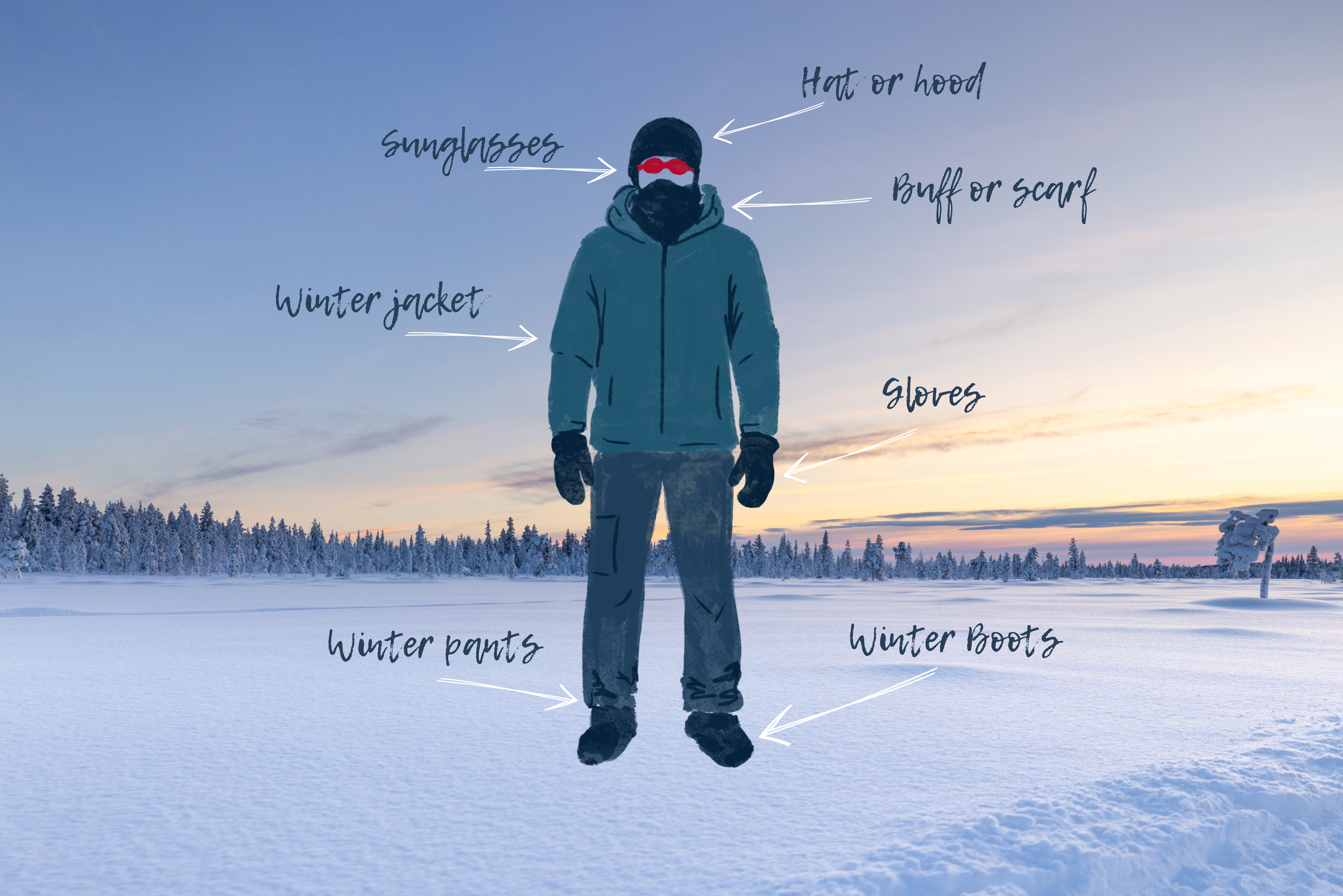
Understanding how your body responds to cold, physical activity, and wind makes it much easier to pack efficiently—and, in the end, you'll usually stay warmer too.
Whether you're joining a short introductory ride, a full-day adventure, or a multi-day expedition across the Arctic fells, few topics come up more often before a husky safari—and are simultaneously underestimated as much—as choosing the right clothing. Yet what you wear often determines whether you'll enjoy every minute of the experience or spend the entire tour thinking about cold hands and wet feet.
Many visitors arrive in Lapland with a clear picture in mind: deep snow, biting cold, and temperatures well below freezing. As a result, the thickest winter jacket they own usually ends up in their suitcase—the heavier, warmer, and fluffier, the better. For some travelers, it's equally important that their winter outfit is fashionable, even if it isn't designed to provide the level of protection that Arctic conditions demand.
This is where one of the most common mistakes begins. A husky safari places very different demands on your clothing than a winter stroll through the city or a day on the ski slopes. Understanding how your body responds to cold, physical activity, and wind makes it much easier to pack efficiently—and, in the end, you'll usually stay warmer too.
Temperature Only Tells Half the Story
"How cold will it be?" is one of the first questions many guests ask. The more important question, however, is: "How cold will it actually feel?"
The answer depends on far more than the number shown on a thermometer. Wind can dramatically increase the rate at which your body loses heat, while moisture significantly reduces the insulating performance of almost any clothing. At the same time, your body generates different amounts of heat depending on how active you are.
A sunny winter day at -15°C (5°F) in a sheltered forest can feel surprisingly comfortable. By contrast, -8°C (18°F) on an exposed fell with a strong headwind can feel much colder and far less pleasant.
A husky safari adds another important factor to the equation. Even at moderate speeds, you're constantly exposed to wind created by the moving sled. Over the course of several hours, this continuous airflow cools your face, hands, and legs far more than many first-time visitors expect. That's why experienced mushers pay much less attention to the air temperature itself and focus instead on the overall conditions they can expect to encounter.
Choosing the Right Clothing for Every Type of Husky Safari
Four Types of Tours – Four Very Different Clothing Requirements
One of the biggest misconceptions among first-time visitors is assuming that all husky safaris are the same.
In reality, the demands placed on both you and your clothing can vary dramatically—often more than the difference between a winter hike and a day of cross-country skiing. The length of the tour, the level of physical activity, the weather conditions, and the amount of time you spend standing on the sled all influence what you'll need to wear to stay warm and comfortable throughout the experience.
Clothing for Passengers on a Husky Safari
On shorter introductory tours, guests usually sit comfortably in the sled while the guide drives the dog team. Apart from getting in and out of the sled, there is very little physical activity. As a result, your body produces very little additional heat, while the wind created by the moving sled continuously cools your entire body.
If passengers get cold on these tours, it is rarely because the temperatures are exceptionally low. More often, it's because they remain almost completely inactive for an extended period.
For this type of tour, the rule is simple: it's better to be slightly overdressed than underdressed.
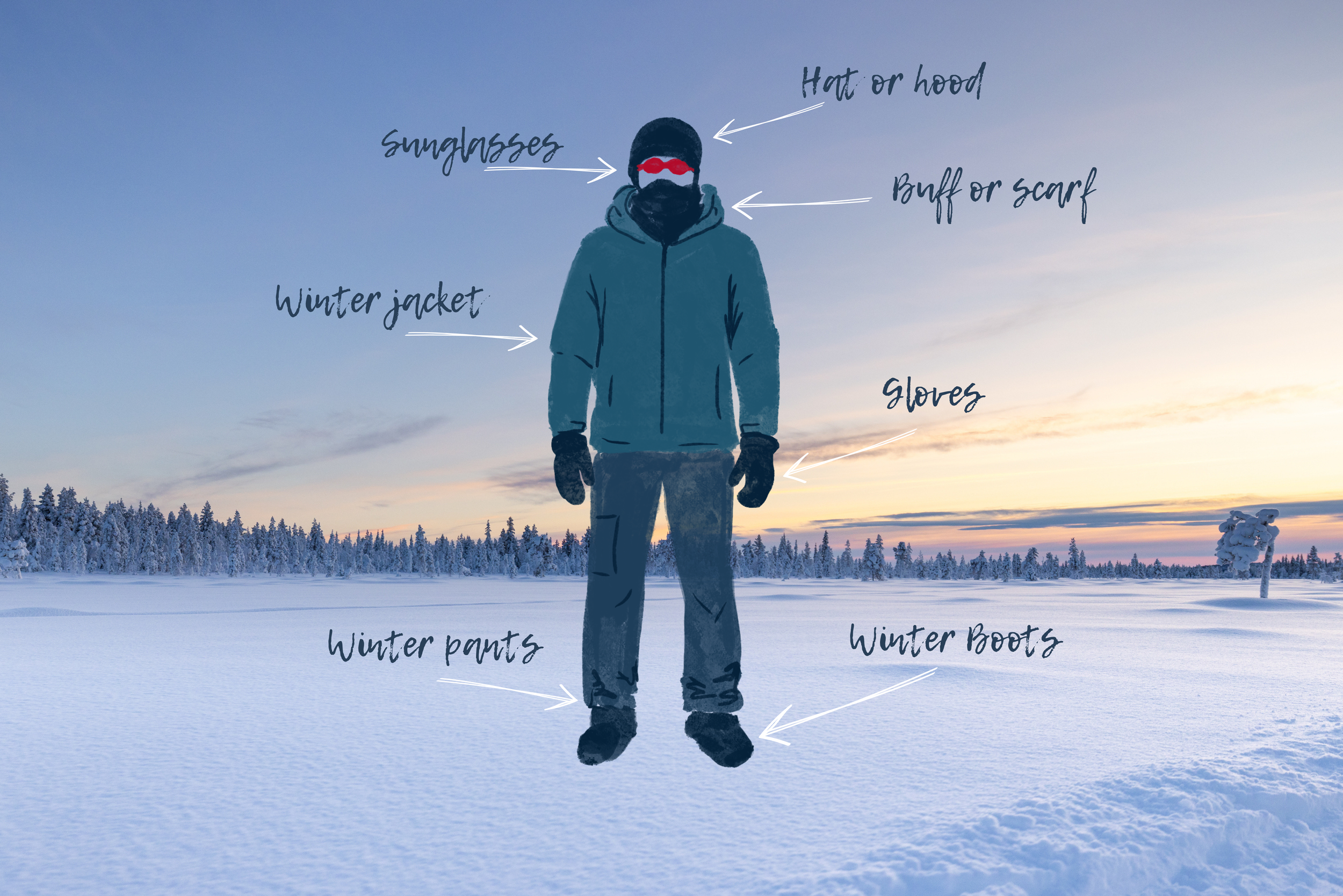
A high-quality winter jacket, insulated trousers, warm winter boots, thick wool socks, and well-insulated gloves form the foundation of a good clothing system. Waterproof or water-resistant mittens are generally a much better choice than finger gloves, as they retain heat far more effectively.
Many fashionable winter accessories that look great in social media photos perform poorly in real Arctic conditions. Faux-fur or sherpa-fleece mittens, hats that leave the ears exposed, oversized scarves, and lightweight quilted jackets may be stylish, but they offer little protection against prolonged exposure to cold and wind. If you dress primarily for the photos, chances are you'll spend the tour wishing you hadn't.
Many professional safari operators also provide insulated thermal suits and winter boots. These are specifically designed for guests who remain seated in the sled for extended periods. While the suits themselves are not excessively bulky, their wind-resistant outer layer works together with the clothing worn underneath to create an effective insulation system that keeps most passengers comfortably warm throughout the tour.
The Right Clothing for Driving Your Own Dog Sled
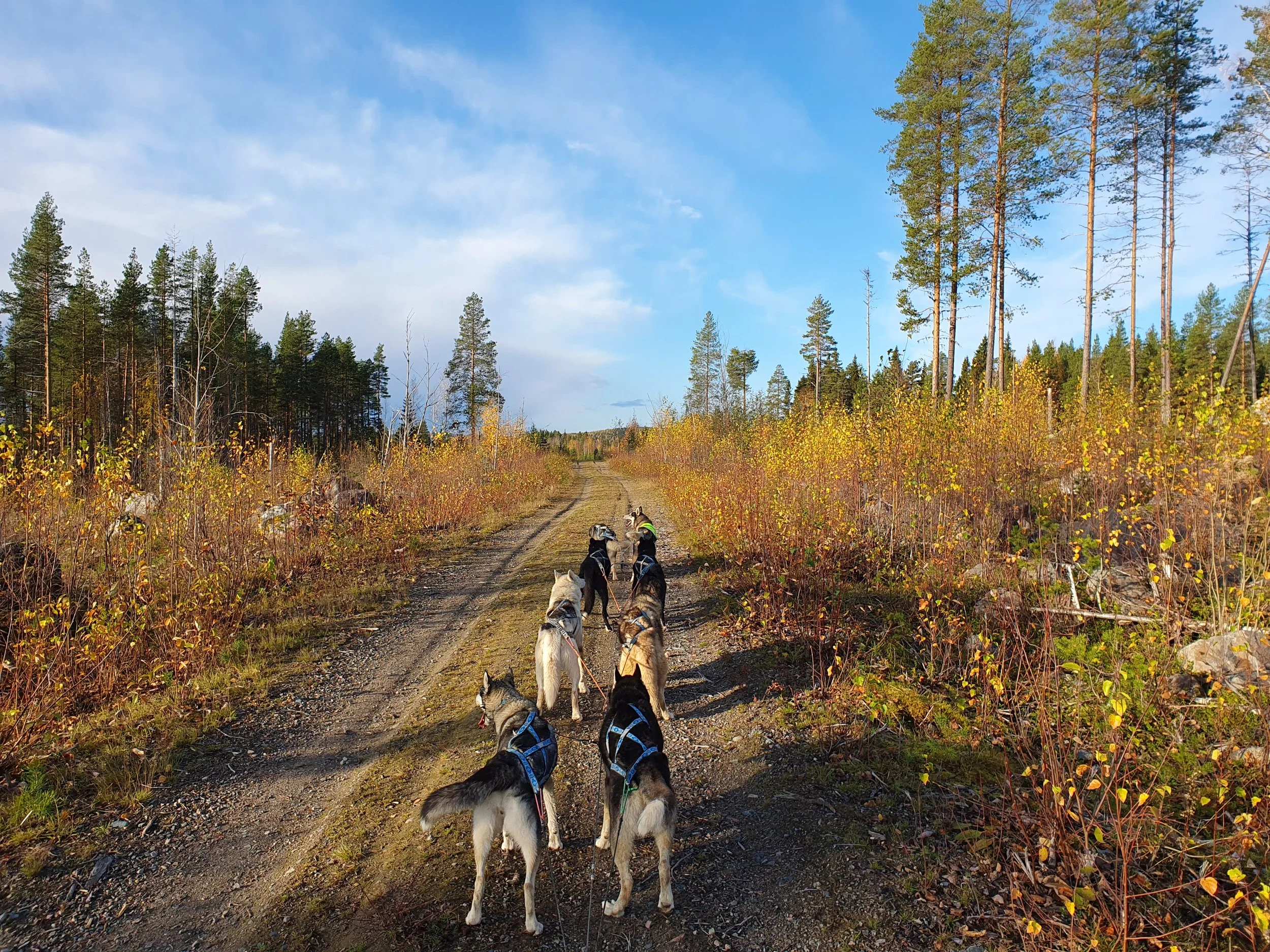
The moment you take control of your own sled, the situation changes completely. Driving a dog sled is nothing like sitting on a sled at a winter resort. As the musher, you'll spend most of the tour standing on the runners, shifting your weight, helping the dogs on uphill sections, running alongside the sled when necessary, braking, and keeping the team under control.
The more challenging the terrain becomes, the more physically demanding the ride is. Many first-time mushers are surprised by how quickly they begin to sweat. And that's where the real challenge starts: in winter, sweat is your biggest enemy.
Once your clothing becomes damp, it loses part of its insulating ability. As soon as your activity level drops—or you stop for a break—your body begins to cool rapidly. That's why experienced mushers often wear considerably less clothing than most people would expect. Staying dry is usually more important than wearing the thickest jacket you own.
Clothing for Multi-Day Husky Tours and Expeditions
On multi-day tours and expeditions, your priorities shift. The goal is no longer to wear the warmest clothing possible, but to choose gear that remains reliable day after day. Your clothing needs to continue insulating effectively, manage moisture, and dry as quickly as possible.
This is one of the reasons why merino wool has earned such an outstanding reputation for winter travel. It continues to provide insulation even when damp, resists odors remarkably well over several days, and helps maintain a comfortable body temperature across a wide range of activity levels. Equally important is bringing enough spare clothing to stay dry throughout the trip.
A second pair of gloves may not seem essential, but it is often one of the most valuable pieces of equipment you can pack. Wet gloves dry very slowly in Arctic conditions, and the same is true for wool socks.
If you're spending several days on the trail, you should always have at least one completely dry spare pair of gloves and socks readily available.
For headwear, a merino wool beanie is often sufficient when worn beneath one or more jacket hoods, which provide additional insulation and excellent protection from the wind. If you prefer not to use a hood, a water-resistant insulated winter hat—such as a down-filled model from brands like Fjällräven—can provide excellent warmth while protecting your ears and head from the elements.
Wind and Weather on the Arctic Fjäll: What Your Clothing Needs to Handle
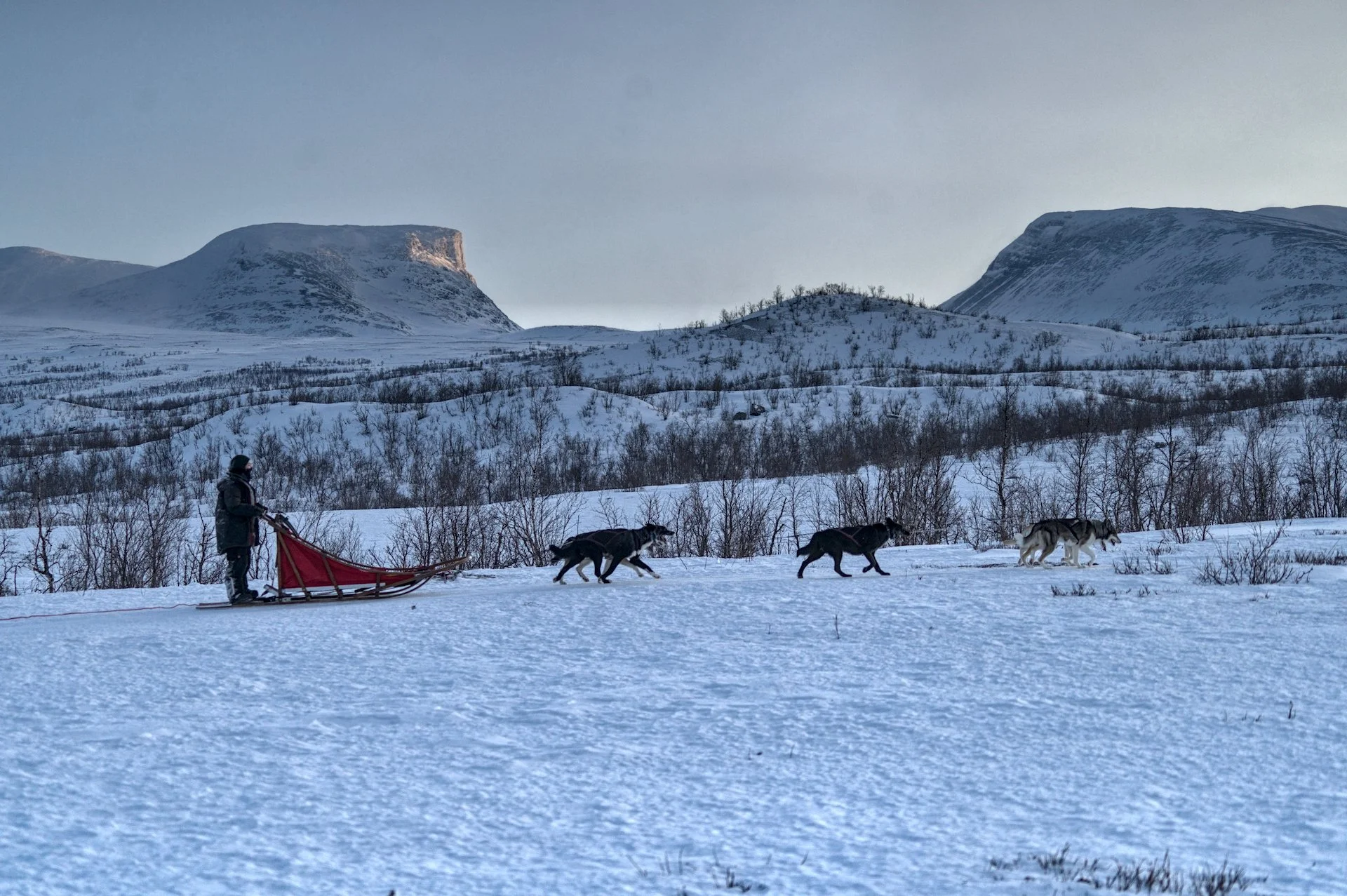
While forests offer natural shelter from the elements, conditions above the tree line are an entirely different story. The open Arctic fjäll provide little to no protection from the wind.
Even a moderate breeze can make the air feel significantly colder than the thermometer suggests. That's why proper wind protection is just as important as insulation on longer tours and expeditions. In addition to warm clothing, windproof outer layers and reliable face protection should be considered essential.
A balaclava helps shield your nose, cheeks, and chin from the constant wind created by both the weather and the moving sled. Likewise, ski goggles do much more than keep your eyes from watering—they also protect the cornea from tiny airborne ice crystals that, in strong winds, can feel like fine sandpaper against your eyes.
When temperatures drop below -25°C (-13°F), these seemingly small details often make a greater difference to your comfort than wearing an even thicker jacket.
General Clothing Tips for a Husky Safari
The Layering System: Why Multiple Layers Make All the Difference
For decades, experienced outdoor enthusiasts have relied on a simple principle rather than wearing the thickest clothing possible: layering. Each layer has a specific purpose, and together they provide far better comfort and flexibility than a single bulky jacket.
The base layer sits directly against your skin and transports moisture away from your body. Merino wool and high-quality synthetic fabrics are ideal choices because they continue to insulate even when you begin to sweat. Cotton, on the other hand, absorbs moisture, dries slowly, and quickly loses much of its insulating ability. One of the most effective options for highly active winter travel is merino mesh base layers. Worn close to the skin, their open-knit structure helps move moisture away while trapping pockets of warm air.
The mid layer provides insulation and can be made from fleece, wool, or lightweight synthetic insulation such as PrimaLoft®. Its job is to retain the body heat generated through movement while allowing moisture to continue moving outward.
Finally, the outer layer protects you from wind, snow, and moisture. This may be the insulated thermal suit provided by your tour operator or a windproof and waterproof jacket and trousers made with materials such as GORE-TEX.
The greatest advantage of a layering system is its flexibility. As your activity level increases, you can easily open a zipper or remove a layer to prevent overheating. When you stop for a break and your body begins to cool, you can quickly add insulation again. This approach works just as well on a relatively mild day at -5°C (23°F) as it does in extreme Arctic temperatures of -35°C (-31°F).
Down or Synthetic Insulation – Which Is Better for a Husky Safari?
Few topics spark as much debate among outdoor enthusiasts as the choice between down and synthetic insulation. Down jackets offer the best warmth-to-weight ratio and are exceptionally effective in cold, dry conditions. On crisp winter days with little moisture, they are hard to beat.
Synthetic insulated jackets, however, have one major advantage: they continue to provide reliable insulation even when they become damp. Since moisture from perspiration is often unavoidable during active winter travel, many experienced winter adventurers use both systems. They wear a synthetic insulated jacket while mushing or hiking and keep a lightweight down jacket in reserve for breaks or relaxing at the cabin in the evening.
For most guided husky safaris, however, a high-quality insulated jacket—whether filled with down or a modern synthetic insulation—is more than sufficient, provided it is combined with an effective layering system and appropriate wind protection.
The Small Details: Gloves, Sunglasses, and Other Essentials That Make a Big Difference
It's rarely the big items of clothing that determine how comfortable you'll be on a husky safari. More often, it's the small details that make the biggest difference.
Winter boots that fit too tightly can restrict circulation, leaving your feet cold even when you're wearing thick wool socks. A little extra room allows warm air to circulate and helps your feet stay warmer for longer.
When it comes to gloves, finger gloves offer better dexterity, while mittens provide significantly more warmth by allowing your fingers to share heat. For most winter conditions, mittens are the better choice.
A Buff® or multifunctional neck gaiter is another remarkably versatile piece of gear. It can protect your neck, nose, cheeks, and lower face from wind and cold, and can be adjusted in seconds as conditions change. In extremely low temperatures, a neoprene face mask may provide additional protection against freezing wind.
Even a simple pair of sunglasses belongs on your packing list for sunny winter days in Lapland. Fresh snow reflects a large proportion of the sun's UV radiation, which can quickly cause eye strain or even snow blindness without adequate eye protection.
Do I Need Specialized Winter Clothing for a Husky Safari?
Not necessarily.
Most professional husky safari operators provide thermal suits, parkas or insulated overtrousers, winter boots, and in some cases even gloves. If you're unsure what equipment is included, it's always worth asking your tour operator in advance. For shorter safaris, a good set of winter clothing combined with the supplied outerwear is usually all you'll need.
If you spend a lot of time outdoors during the winter, however, you'll quickly discover that high-quality technical clothing isn't a luxury—it's a significant investment in comfort and safety.
What Kind of Boots Should I Wear on a Husky Safari?
The good news is that most operators provide suitable winter boots for their guests. These are typically pac boots, designed specifically for prolonged use in cold Arctic conditions.
Pac boots usually feature a fully waterproof lower section made from natural rubber or a durable rubber compound, combined with an upper made from full-grain leather (smooth or nubuck), nylon, or Cordura®. Inside, a removable felt or insulated liner provides excellent thermal protection. Worn with one to three pairs of appropriate socks, quality pac boots are generally warm enough for temperatures down to around -30°C (-22°F).
Again, it's worth confirming with your tour operator beforehand that boots are included.
Every winter, guides encounter guests who arrive wearing ordinary street shoes, sneakers, or fashionable winter boots such as Moon Boots. While these may be perfectly adequate for walking around town, they are simply not designed for several hours on a dog sled.
Even many insulated city winter boots keep your feet warm only while you're walking. Once you're sitting still in the sled—or standing on the runners driving your own team—your feet cool down surprisingly quickly. Moon Boots generally provide better insulation than everyday footwear, but they offer very little ankle support or stability. This can become a safety issue when driving your own sled, especially when operating the brake or stepping off the runners on uneven terrain.
The takeaway is simple: if your tour operator provides Arctic winter boots, wear them. They are almost certainly better suited to the conditions than the footwear most people already own. Cold feet can turn an unforgettable adventure into an uncomfortable experience far more quickly than almost anything else.
Conclusion
Choosing the right clothing for a husky safari isn't about wearing as many layers as possible or buying the thickest winter jacket you can find. It's about wearing the right layers.
Once you understand how wind, physical activity, and moisture affect your body's ability to stay warm, you'll discover that winter adventures can be surprisingly comfortable—even in temperatures well below freezing.
Whether you're enjoying a one-hour introductory ride as a passenger, driving your own sled on a full-day safari, or embarking on a multi-day expedition across the Arctic fells of northern Scandinavia, the right clothing allows you to focus on the experience instead of the cold.
And one final piece of advice: it's always better to have an extra layer and not need it than to need it and not have it.