FREKE ANIMAL Welfare AWARD 2026
With this award, FREKE Ethical Dogsledding recognizes an operator that not only meets our standards for animal welfare, dog care and professional kennel management, but clearly exceeds them in several areas.
With this award, FREKE Ethical Dogsledding recognizes an operator that not only meets our standards for animal welfare, dog care and professional kennel management, but clearly exceeds them in several areas.
Our evaluation is not based solely on what guests see during a tour. What matters is the dogs' entire lives: breeding and early development, housing and care, training, recovery, veterinary care, breeding management, activities outside the winter season, and the question of how much knowledge, time and individual attention is genuinely invested in every single dog.
It is precisely in these areas that Séjour Laponie has impressed us in an exceptional way.
In Älgbäck, in the Örån Valley, Aurélie Delattre and Rémy Coste have created a kennel where the dogs are not simply part of a tourism business. Instead, the tourism experience is organised around life with the dogs.
Small groups, personal guidance and a daily routine adapted to the seasons, training conditions and individual needs of the dogs are at the heart of their concept.
The dogs are not merely seen as working animals, but as individuals and athletes.
Two operators with exceptional expertise
One of the key reasons for the exceptional quality of the kennel lies in the combination of Aurélie and Rémy's individual expertise.
Aurélie Delattre – veterinary care at an exceptional level
Aurélie is a veterinarian and also has additional expertise in osteopathy and chiropractic care. She has, among other roles, been part of the veterinary team at La Grande Odyssée Savoie Mont-Blanc, and today combines her medical knowledge directly with her practical work in the kennel.
For the dogs, this means that health management does not only begin once an obvious injury has occurred.
Especially in working sled dogs, subtle changes in movement, muscle tension or a decline in performance can be early signs of physical issues. Thanks to Aurélie's veterinary background, such changes can be identified early and immediately taken into account in training, recovery and treatment.
For FREKE, this is an exceptional advantage: medical prevention and athletic management work hand in hand.
Rémy Coste – dog leadership rather than mere control
Rémy Coste brings many years of experience from competitive mushing. Together with Aurélie, he spent several years in Alaska, where they gained extensive experience in long-distance mushing.
What impressed us most, however, is not only his racing experience, but also his approach to training and leading dogs.
Rémy once explained that he learned a great deal about dog training and handling from the renowned musher Heini Winter, and has consistently developed and adapted these principles further.
During his participation in the Stage Stop Race, Rondy and ONAC, his team became known as “Rémy and the Silent Dogs.”
While dog teams at starting lines are often barking intensely, jumping and constantly pulling into their harnesses, Rémy demonstrated that highly motivated sled dogs can also wait for their start in a calm and focused manner.
This does not mean suppressing their motivation. Instead, the dogs understand what is expected of them and are able to use their energy in a controlled way.
For FREKE, this is an important sign of quality.
Good dog leadership is not defined by loudness or dominance, but by clear communication, consistent training and trust.
Rémy invests significant time, energy and expertise into this work and continues to develop his knowledge and skills.
Responsible breeding begins before birth
Séjour Laponie's breeding management has also greatly impressed us.
A litter is planned only approximately every two to three years, and exclusively as a summer litter.
From around the middle of her pregnancy, the pregnant female moves into the house. The puppies are born there and spend their first weeks in a protected indoor environment.
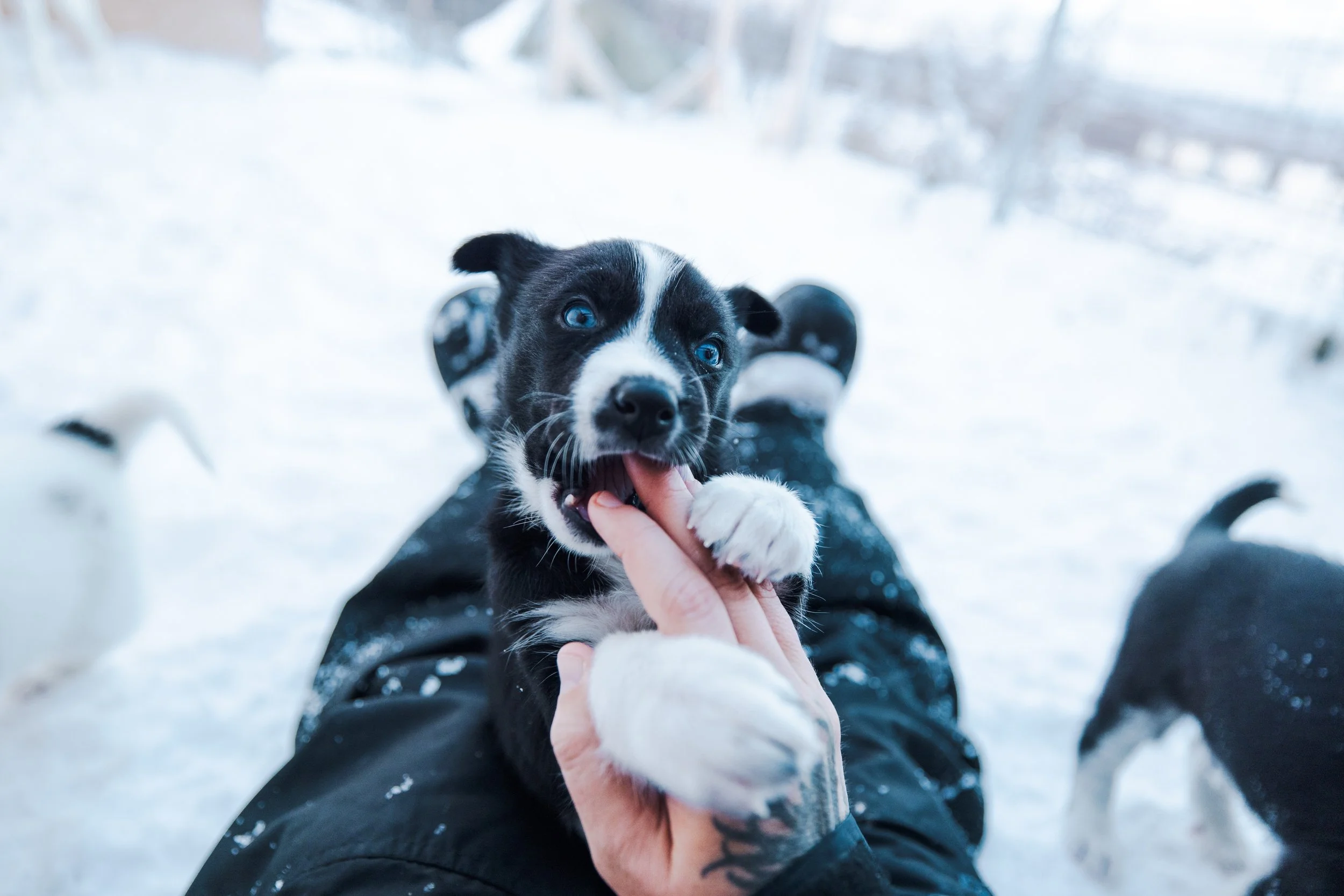
From around six weeks of age, they are gradually introduced to the outdoors. Their familiar whelping box is moved into the puppy area, allowing the young dogs more space to play and explore while initially keeping their familiar place of retreat.
At around ten weeks of age, they eventually begin sleeping outdoors as well.
The transition from the house to the kennel is therefore not abrupt, but takes place gradually, step by step.
Socialisation with people, the environment and adult dogs
The puppies regularly go for walks, visit the dog yard every day and are introduced to adult dogs.
This contact is particularly important. Young dogs do not learn social behaviour exclusively from humans, but to a great extent also from confident and well-socialised adult dogs.
Only at around one year of age are they permanently integrated into the dog yard.
This means that between birth and full integration into kennel life, there is a long developmental process that gives the young dogs time to mature both physically and socially.
Preventing overproduction
For us, responsible breeding also means ensuring that no more dogs are bred than can be needed and properly cared for in the long term.
Séjour Laponie therefore actively manages reproduction.
Dogs are deliberately neutered or spayed when no further breeding is planned. Intact dogs can be closely monitored and consistently separated during heat cycles. In addition, female dogs are regularly spayed.
Together with the very low breeding frequency of only one litter approximately every two to three years, this helps prevent the kennel population from growing uncontrollably.
Rather than looking for solutions once there are too many dogs – prevent them from being bred in the first place.
Clearly limited workloads and structured recovery
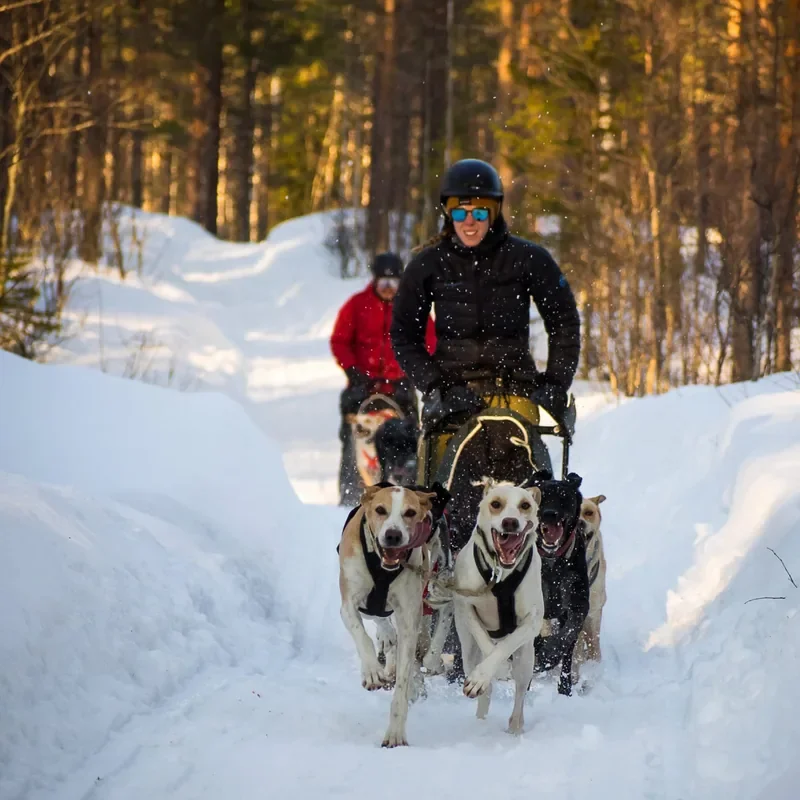
The tours offered cover approximately 20 kilometres in the morning or 30 kilometres in the afternoon and last a maximum of around two hours.
Depending on the conditions, the dogs may run at a fast pace and can also gallop.
However, distance alone says little about the actual workload. Snow conditions, temperature, speed, sled weight and the dogs' level of fitness all play an equally important role.
This makes recovery particularly important.
The dogs receive three rest days.
Rest is not viewed as lost working time, but as an essential part of a functioning training system.
Trail maintenance as part of animal welfare
The trails are groomed every evening.
This ensures that the teams have access to the best possible trails that are sufficiently wide and manageable.
This reduces unnecessary physical strain. Deep, uneven or poorly maintained snow can significantly increase resistance, alter the dogs' movement patterns and increase the risk of injury.
Trail management is therefore not merely a matter of comfort for guests, but an active part of workload management for the dogs.
Life remains varied beyond the winter season
Sled dogs are not only active during the tourism season.
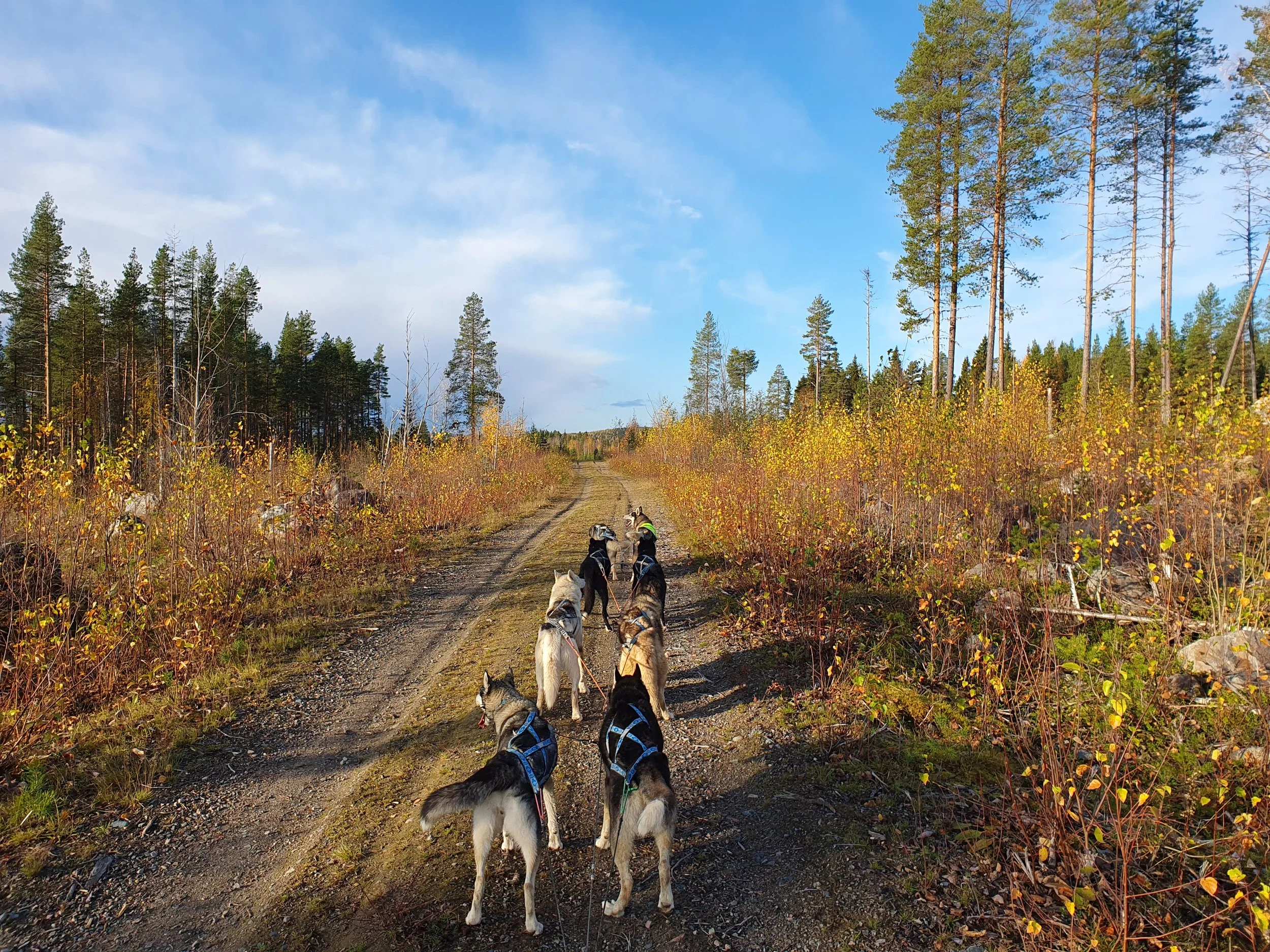
At Séjour Laponie, the dogs leave their kennels every day. Depending on the season, their daily routine includes bikejoring training, walks, time playing in the free-run area and other activities.
The nearby river provides additional opportunities for exercise and cooling down. Enrichment tools such as KONGs are also used.
The dogs also have access to a dog exercise wheel, providing additional opportunities for self-directed physical activity.
This prevents an extreme contrast between intensive work during the winter season and months of inactivity during the rest of the year.
Why Séjour Laponie deserves this award
There is no single measure that led to this award.
What matters is the combination of many consistent and well-considered decisions.
One litter every two to three years instead of continuous puppy production. Carefully planned summer litters. A protected birth indoors and a gradual transition of the puppies into kennel life. Socialisation with people, the environment and adult dogs. Controlled reproduction management. Clearly limited working distances and structured rest days. Daily trail maintenance. Meaningful activities beyond the winter season.
In addition, there are two operators who bring an exceptional amount of knowledge and personal commitment to their kennel.
Through his calm and consistent approach to dog handling, Rémy demonstrates that motivation and control are not opposites. Aurélie combines veterinary care with expertise in osteopathy and chiropractic treatment, creating the foundation for particularly comprehensive health management.
It is precisely this combination of knowledge, experience, continuous learning and consistent implementation that was decisive in awarding the FREKE Animal Welfare Award.
What the FREKE Award stands for
With the FREKE Animal Welfare Award, we recognise operators who not only meet our requirements but also demonstrate what is possible beyond them.
The aim is not to present a single kennel as a universal model for everyone.
Operators differ in size, location, focus and available resources. However, particularly successful approaches can serve as inspiration and encourage others to further develop their own standards.
Séjour Laponie demonstrates that professional mushing, athletic ambition, high-quality tourism and a consistent commitment to dog welfare can go hand in hand.
The award therefore recognises not only the level that has already been achieved, but above all the philosophy behind it:
Continuously developing knowledge, improving structures and never assuming that “good enough” has to be the end of progress.
One of FREKE's main goals is to contribute to raising standards across the sled dog tourism industry as a whole and to make particularly good practices visible, so that they can ultimately become a benchmark for the entire industry.