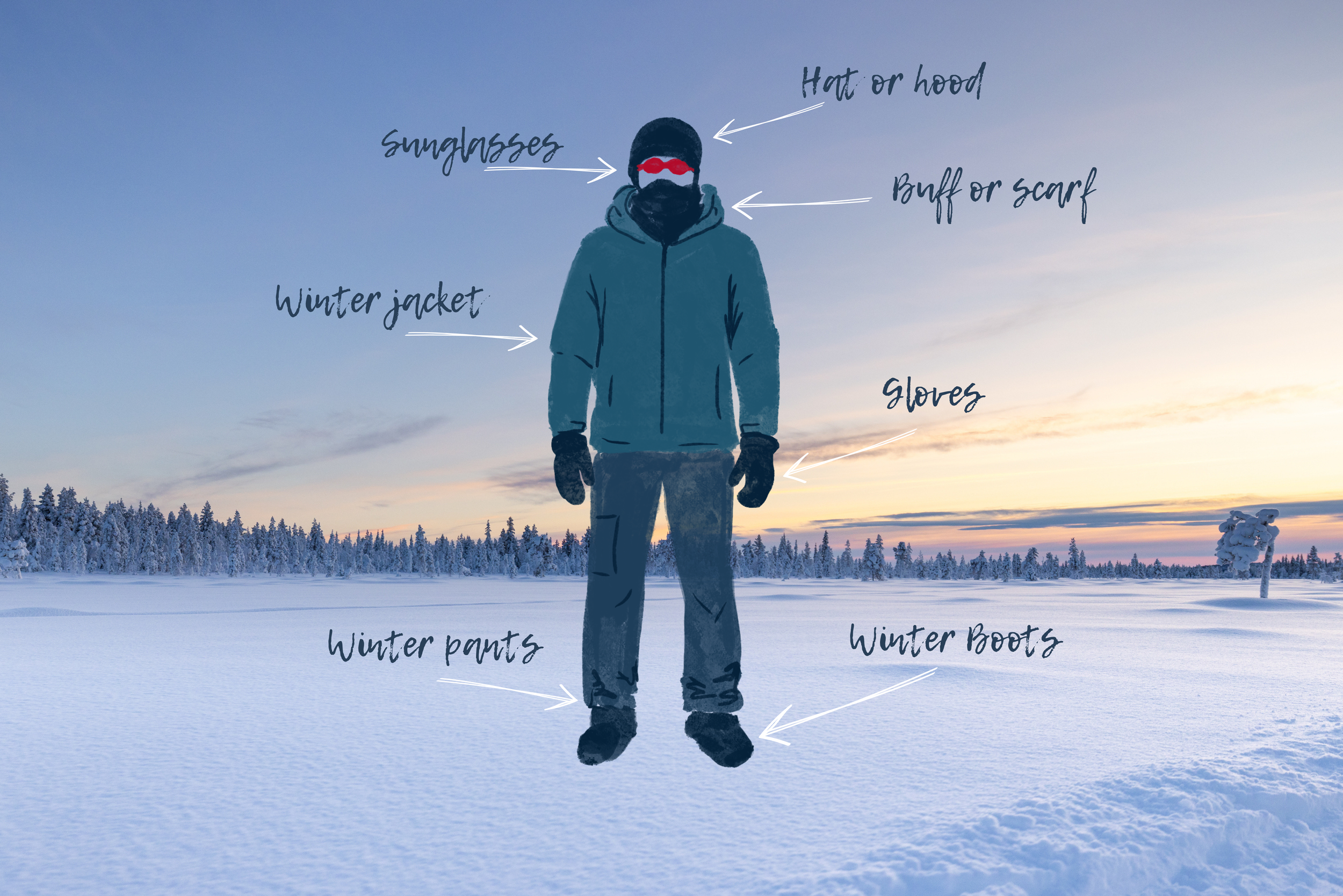
Winter begins long before the first snow.
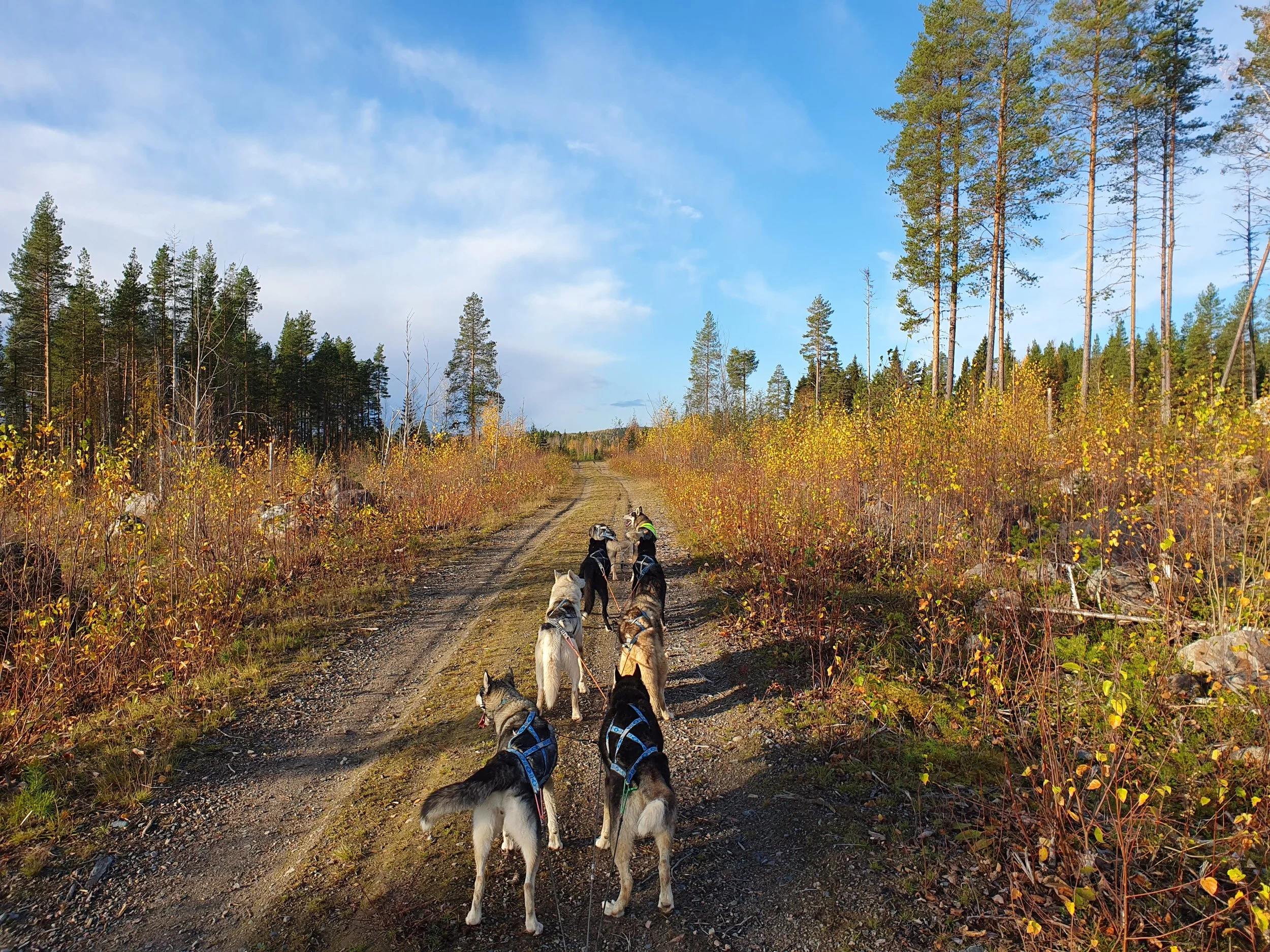
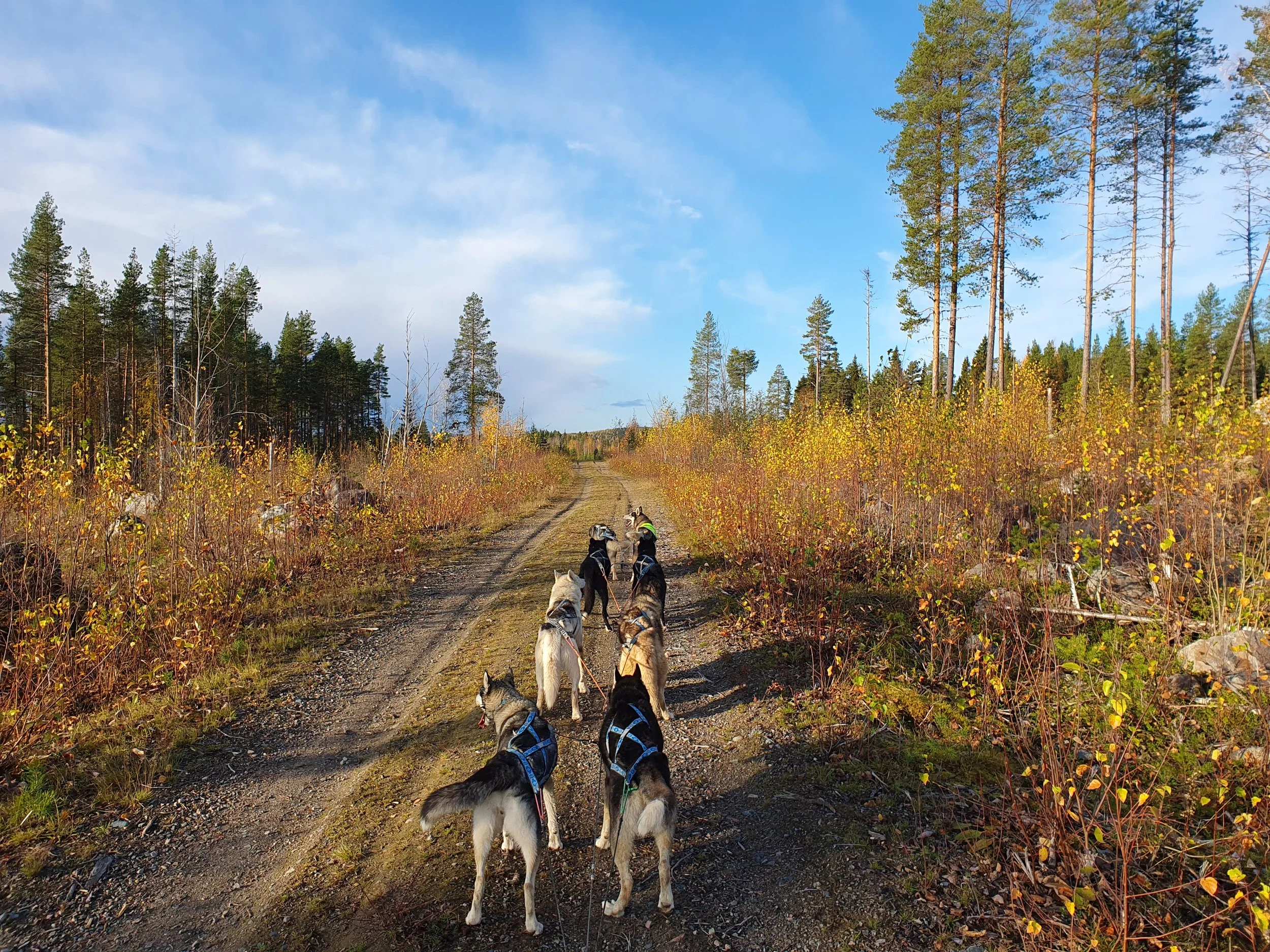
Would you like to experience autumn in the far north together with sled dogs?
Then you’ve found the perfect tour! All photos in this post are from this tour by WINTERDOGS and give you a glimpse of what you can expect on your adventure.
What Autumn Training Reveals About Ethical Sled Dog Keeping
Anyone who experiences a sled dog tour in winter usually only sees the finished picture: a team of dogs in front of the sled, excited dogs, snow-covered forests and a musher guiding their team through the landscape. What few guests see are the months leading up to it. Yet it is precisely during this time that the importance placed on the dogs’ welfare within a kennel becomes apparent.
Because ethical sled dog keeping does not begin with the question of how a tour is conducted. It begins much earlier – with everyday care, health care and nutrition, sufficient activity and social contact, and, most importantly, with the way dogs are prepared for their future work.
Autumn training is a particularly good example of this.
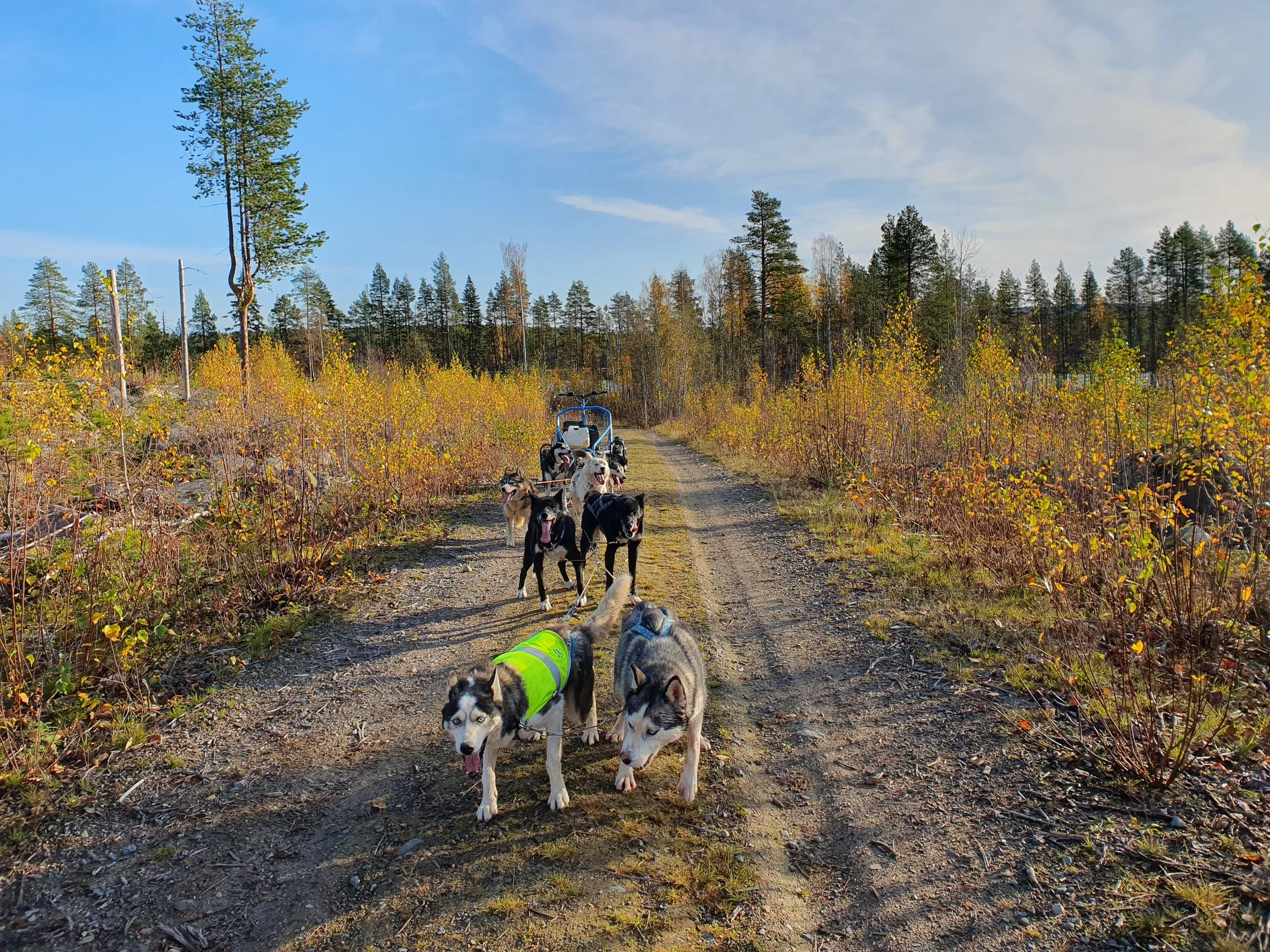
There is often still no snow in the valleys of Lapland when the first teams start training regularly again. After the quieter summer months, harnesses are brought out and ATVs or training carts are prepared. The dogs usually know what is about to happen long before departure. In the kennel, there is barking, jumping and pulling. Many of them can hardly wait to finally run again.
However, this enthusiasm should not obscure the fact that responsibility always lies with the human.
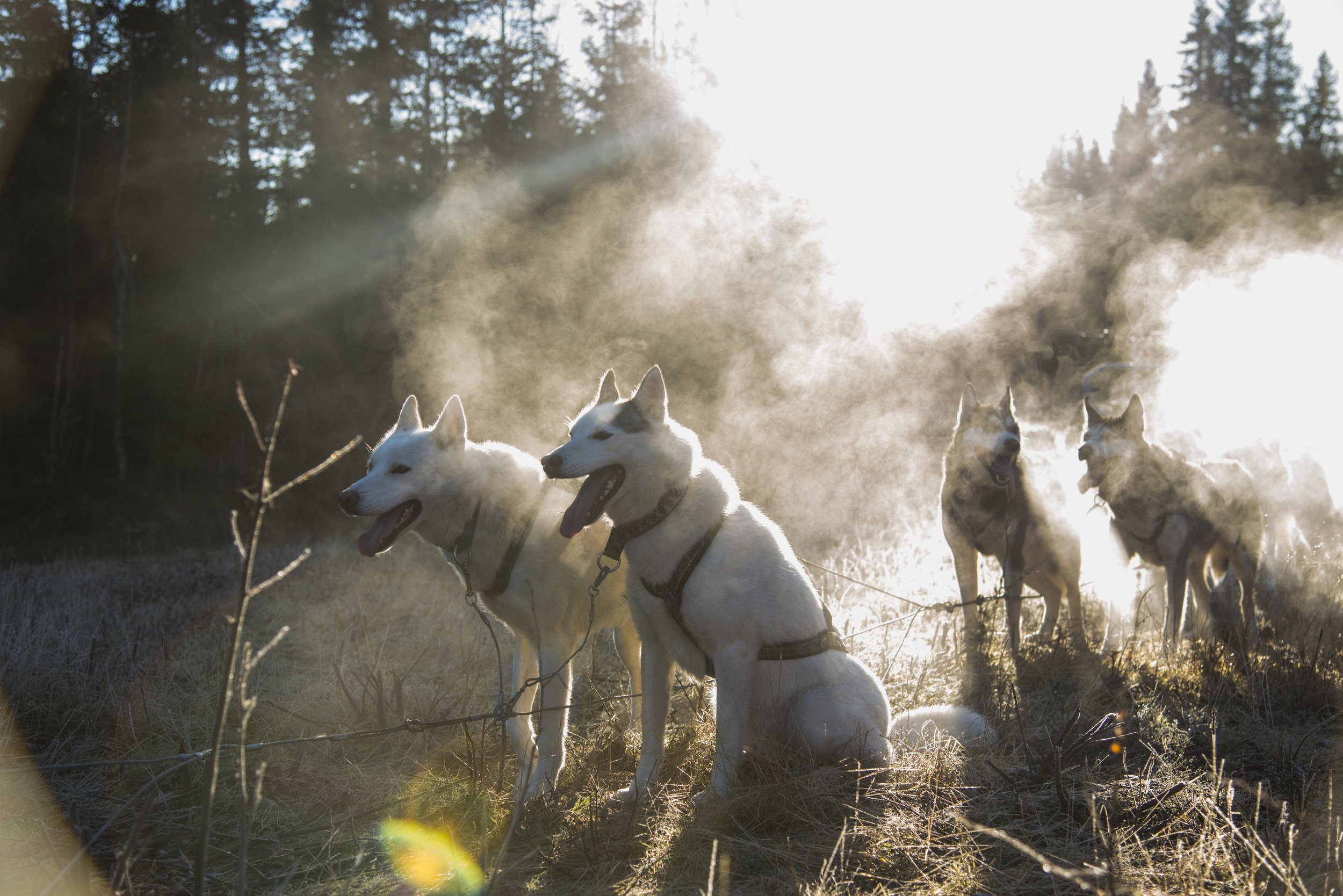
A Dog That Wants to Run May Still Need a Break
Sled dogs are working dogs. Many of them show an exceptionally high motivation to run and pull. This very quality is what makes working with them so fascinating – but at the same time, it creates a particular responsibility.
Because a dog cannot assess whether its training volume is appropriate in view of the months ahead. It does not know the season plan or recovery periods. A highly motivated dog may want to keep running even though taking a break would be the better choice for its body.
That is why motivation must never automatically be equated with physical capacity.
After a quieter summer period, fitness and muscle strength need to be built up gradually. Tendons, joints and paws also need time to readjust to regular physical strain. Responsible training therefore begins with short distances and increases them slowly.
There can be no kilometre plan that applies equally to every dog.
A two-year-old dog facing its first full season has different requirements than an experienced dog in its prime. A senior dog may need longer recovery periods. A dog recovering from an injury needs a different training progression than its healthy teammates.
Ethical dog keeping therefore does not mean treating all dogs the same.
It means taking their individual needs seriously.
The Training Plan Must Adapt to the Dog
Especially in larger kennels, it would be considerably easier from an organisational perspective to train dogs according to a fixed schedule: Team A runs route X, Team B route Y, and by the end of the week a certain number of kilometres has been completed.
But a dog is not a position in a spreadsheet.
Responsible training requires observation. How does the individual dog move? Does its towline remain taut? Does its running style change? How quickly does it recover after a run? Does it eat normally? Are there any changes to its paws? How does it behave several hours later?
Observations like these may mean that the training plan needs to be adjusted.
Perhaps a dog runs a shorter distance today. Perhaps it gets an additional rest day. Perhaps it is taken out of training completely for a period of time.
That is not a failure of the training plan.
On the contrary: it shows that the plan was actually made for the dogs – and not the dogs for the plan.
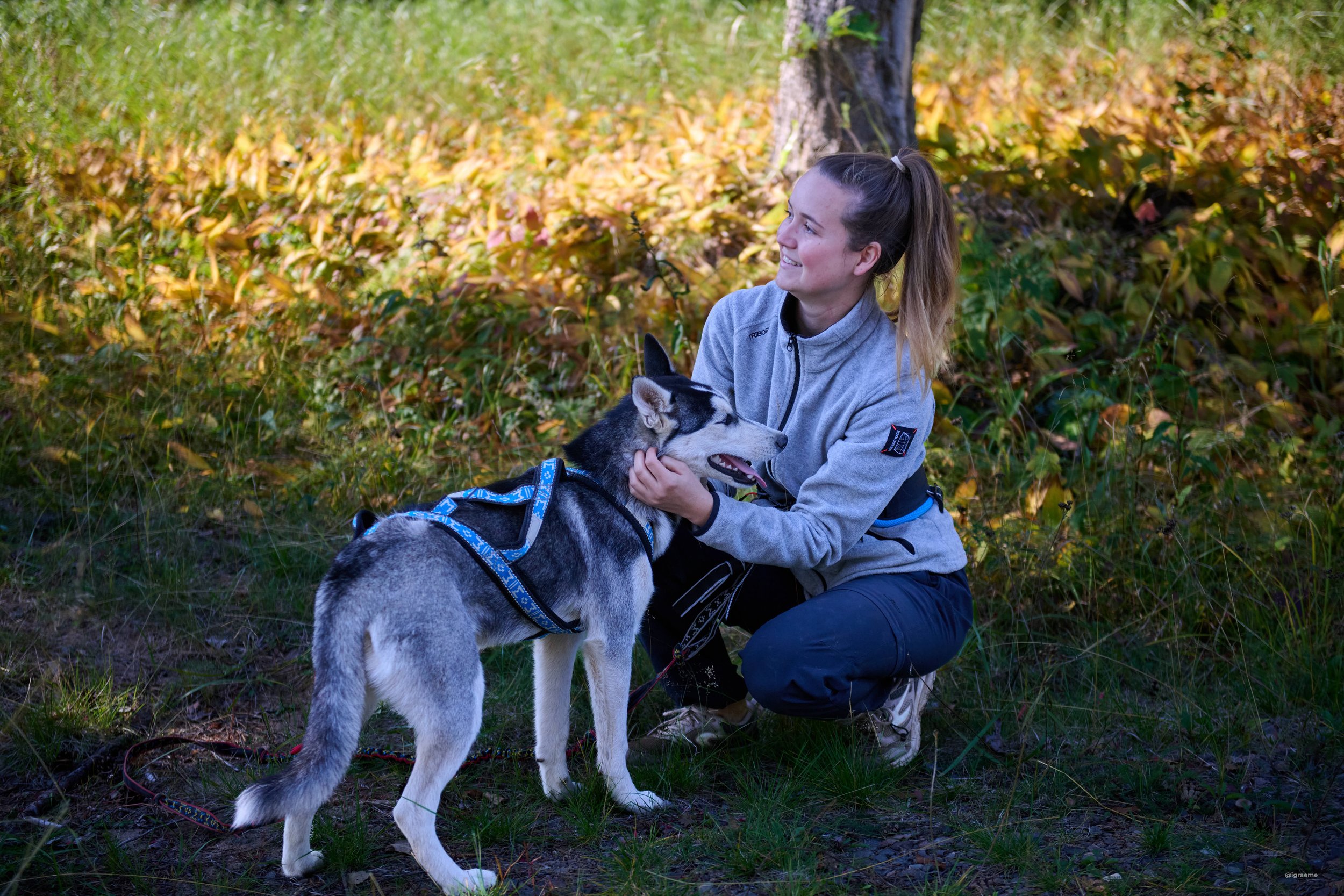
Temperature Also Sets Limits
The same applies to external conditions.
Especially at the beginning of autumn, temperatures can still be relatively mild even in the far north. For humans, a cool September morning may already feel pleasant. For a dog working physically in a harness and producing significant amounts of heat in the process, the situation can be different.
That is why training sessions often take place at night or early in the morning. If the conditions are unsuitable, a run must be shortened, postponed or cancelled.
This also raises a fundamental question of ethical animal keeping: Who determines the limit?
The tour schedule? The training plan? The available working hours?
Or the dog?
A kennel that takes the welfare of its animals seriously must be able to accept that sometimes a run simply does not happen – even when it is inconvenient from an organisational perspective.
Rest Days Are Not a Luxury
Ethical work with sled dogs also means recognising that performance is not created through exercise alone.
Recovery is part of training.
After physical exertion, the body needs time to recover and adapt. More training does not automatically mean better-trained dogs. An animal that is constantly running is not necessarily better trained than one whose workload is carefully managed.
Rest days are therefore not a sign that a dog is “not needed”. They are an essential part of sensible training planning.
The same applies to older dogs. A senior dog may still greatly enjoy running with its team without being able to cover the same distances it did a few years earlier.
Ethical animal keeping means not viewing dogs solely in terms of whether they “work” or “do not work”.
A dog may run shorter distances.
It may slow down.
And at some point, it may stop altogether.
Its value to the kennel must never depend on how many kilometres it can still pull.
Not Every Sled Dog Has to Become a Sled Dog
This idea becomes particularly clear when it comes to young dogs.
For them, autumn training is a learning phase. They become familiar with the harness, start running regularly in a gangline and begin to understand what the other dogs expect of them.
Young dogs are often paired with experienced animals. These provide reassurance and teach them through their behaviour many things that a human could hardly explain.
Some young dogs take to it very quickly. Others need time.
And some may never enjoy it.
That must be allowed, too.
Breeding, lineage or the original plans of a human do not guarantee that a particular dog will enjoy a particular task. Ethical treatment of working dogs must therefore include the possibility that an animal is not suited to the intended work – physically or temperamentally.
A dog should not have to work simply because its upkeep was economically planned around that work.
Health Is Also Revealed After Training
Responsible training does not end the moment the team returns to the kennel.
In fact, an important part of the work begins right then.
Paws are checked, harnesses are inspected to make sure they fit properly, and the dogs’ physical condition is monitored. Small changes can indicate that the workload or equipment needs to be adjusted.
Nutrition must also keep pace with increasing activity. The energy requirements of a working sled dog differ considerably from those of a dog during a quieter period. Providing sufficient nutrition adapted to the workload is therefore not an added feature of a good kennel, but a fundamental prerequisite for allowing dogs to work at all.
The same applies to medical care and the willingness to take a dog out of training if there are any health concerns.
The crucial question is not: Can this dog still run?
But rather: Should this dog run today?
The difference between these two questions represents an essential part of responsible animal care.
The Dog Is Not a Seasonal Working Tool
When winter begins, training takes on a visible purpose. Training carts become sleds, autumn trails become snow-covered routes, and training kilometres eventually become tours with guests.
For a commercial kennel, this marks the most economically important time of the year.
For the dogs, however, nothing changes about the fundamental principles.
They still need rest during the season. Their individual limits still need to be taken into account. Even a fully booked day of tours does not suddenly make a dog more physically capable. Illness, injury, age or exhaustion do not follow a booking schedule.
This is precisely where a conflict between economic interests and animal welfare can arise.
A kennel needs enough dogs, staff and organisational capacity to ensure that taking a dog out of work does not automatically become an operational problem. If every animal is permanently needed to its full capacity, that flexibility is missing.
Ethical sled dog keeping is therefore not only a question of a musher’s personal attitude. It is also a question of how the business is structured.
A system must be organised in such a way that choosing what is best for a dog is actually possible.
Ethical Training Requires Qualified Staff
However, all of these principles depend on something that is often given too little attention in discussions about ethical dogsledding: sufficiently qualified and experienced staff.
A training concept can be as well designed as possible – what ultimately matters is who puts it into practice every day. The people harnessing the dogs, putting teams together and conducting training runs need to know what they are doing. They need experience with sled dogs, be able to assess their physical workload and understand how fitness and muscle strength should be built up properly and gradually.
This involves far more than being able to drive a training cart or harness a team. Anyone training dogs needs to recognise when an animal is not moving normally, becomes unusually tired, changes its pulling performance or shows other subtle signs that something may be wrong. They need to be able to assess when a distance can be increased – and equally, when it needs to be reduced. Team composition, selecting suitable positions and training young dogs also require experience and a good understanding of the individual dog.
Sled dogs in particular can make this challenging for their handlers. Many are highly motivated and show their willingness to work very clearly. A dog that desperately wants to keep running is therefore not automatically a dog that should keep running. Being able to distinguish between the two is part of professional training.
Ethical training therefore cannot be ensured through rules, kilometre limits or training plans alone. It requires people who can read dogs and have enough experience to adapt their decisions to what they actually see in front of them.
Equally important is the number of staff available. Even experienced personnel cannot provide careful individual attention if too few people are responsible for too many dogs. Training is only one part of everyday kennel life. Feeding, cleaning, grooming, health checks, caring for injured or older animals and general daily care must also be carried out reliably.
Staff shortages can therefore become a direct animal welfare issue. When work is constantly carried out under time pressure, there is less time to observe individual dogs carefully. Changes may be noticed later, checks may be shortened and training decisions may increasingly be based on organisational requirements rather than the needs of the individual dog.
It becomes particularly problematic when inexperienced seasonal workers or volunteers are expected to take on tasks for which they lack the necessary experience. New staff can of course learn and gradually take on responsibility. However, they need guidance from experienced people, appropriate training and clear boundaries regarding what they are allowed to decide independently. Experience with sled dogs cannot be replaced by a brief introduction.
A responsibly managed kennel must therefore plan its staffing resources just as carefully as the number of dogs it keeps and the number of tours it offers. Anyone keeping a large number of dogs and working with them commercially also has a responsibility to employ enough people who are able to care for and train these animals professionally.
Ethical dog keeping is therefore always also a question of staffing.
Ultimately, it is not the training plan that determines whether a dog's needs are recognised. It is the person standing beside that dog – and whether that person has the experience, knowledge and, above all, the time to look closely.
Ethical Dogsledding Happens Above All When No One Is Watching
For guests, much of this is difficult to assess.
A dog may appear attentive and enthusiastic during a two-hour tour. A kennel may look clean and well maintained. The dogs may respond positively to visitors.
All of that is positive – but it only ever shows one part of the picture.
The important questions go further: How often do the dogs work? How are young dogs introduced to training? What happens to older dogs? What happens in the event of an injury? Are there sufficient rest periods? Are training and tour distances adjusted to individual needs? What happens to a dog that does not want to run or is not suited to the work? And does a dog remain a valued member of the kennel even when it can no longer contribute economically?
These questions are less spectacular than a sled ride through snow-covered forests.
For animal welfare, they are far more important.
Because ethical sled dog keeping is not demonstrated by how beautiful a team looks in a photograph. It is demonstrated through the daily decisions made for each individual dog – especially in those moments when the easiest decision economically or organisationally is not automatically the best one for the animal.
When carabiners start clicking again in the autumn mornings and the first excited dogs line up in front of the training cart, more than just preparation for a new season begins.
A daily balancing act begins between work and recovery, physical ability and individual limits, human plans and the needs of the dog.
This is what makes autumn training perhaps the most invisible, yet most decisive part of ethical dogsledding: because the way a kennel prepares its dogs for winter reveals a great deal about the importance it places on their welfare – even when no guests are watching.